Spring
A yellow-based palette of warm, bright colors. Peach, coral, and bright yellow are flattering choices, lending the skin a subtle yellow glow and a warm impression.
Personal color refers to the colors that harmonize with your natural skin, hair, and eye color to make you look your most attractive. It's not simply the colors you like or what's trendy — it's the optimal set of colors that makes you stand out.
Brightens your skin tone, sharpens facial contours, and creates a more positive overall impression.
Using colors that suit you in clothing, makeup, hair color, and accessories raises the polish of your styling.
Boosts your confidence and helps you make a positive first impression in relationships and social situations.
As personalized consumption grows in the modern beauty and fashion industry, personal color is increasingly used as a branding and marketing element.
✻ Personal color has grown beyond a purely aesthetic standard into a tool for reinforcing one's image and identity.
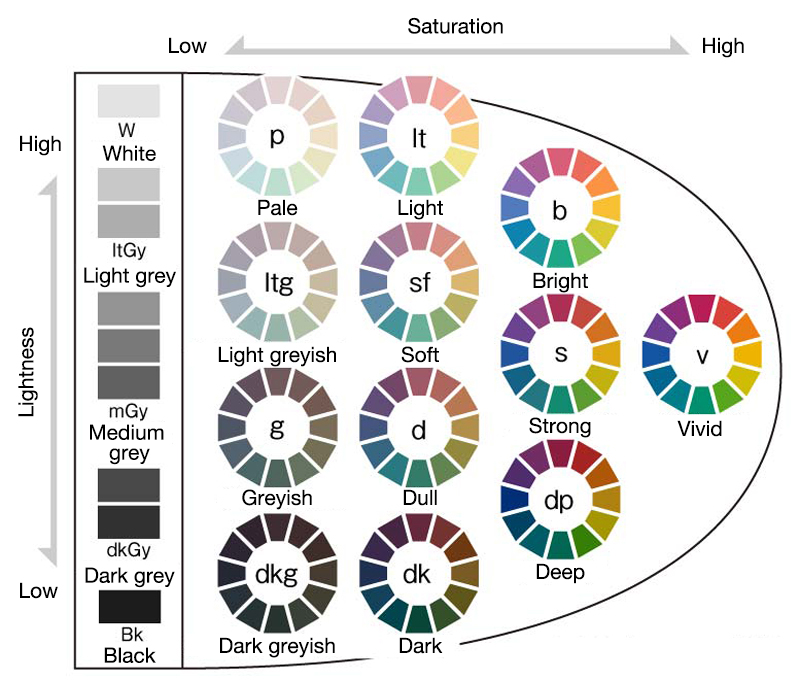
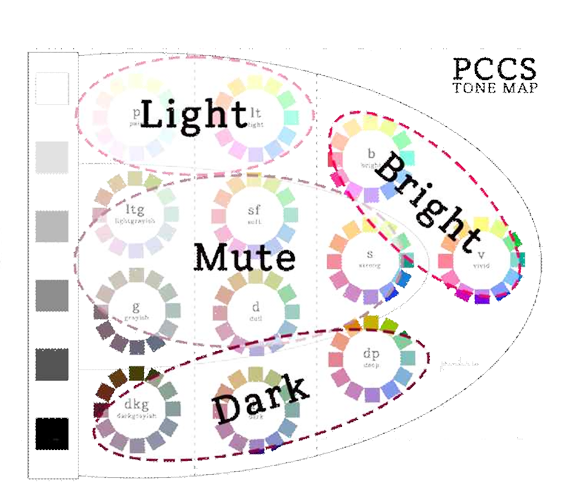
PCCS (Practical Color Co-ordinate System) classifies colors along two axes: Lightness and Saturation. In the chart above, the vertical axis represents lightness and the horizontal axis represents saturation. The same hue can feel completely different depending on its lightness and saturation — this is the core principle behind personal color analysis.
Based on these PCCS tones, the detailed types divide into four groups: Light, Dark, Bright, and Muted. Light covers the light and pale tones; Dark covers the deep, dark, and dark-grayish tones; Bright covers the bright and vivid tones; and Muted covers the soft, light-grayish, grayish, dull, and strong tones. These detailed types are organized by the four-season system of warm and cool undertones — spring, summer, autumn, and winter — and serve as the basis for determining the range of colors that harmonize with your skin, hair, and eye color.
A yellow-based palette of warm, bright colors. Peach, coral, and bright yellow are flattering choices, lending the skin a subtle yellow glow and a warm impression.
A blue-based palette of light, soft colors. Lavender, rose pink, and sky blue pastels are ideal, giving the skin a subtle blue undertone and a translucent look.
A yellow-based palette of warm, mature colors. Terracotta, olive, and mustard — deep, calm tones found in nature — are flattering, giving the skin a golden glow and a warm, mature mood.
A blue-based palette of bold, refined colors. Pure white, black, royal blue, and magenta — bold, high-contrast colors — are flattering, giving clear, translucent skin a cool, refined impression.
High-lightness colors with a bright, airy feel. Pastels are representative, giving a soft and feminine impression.
High-saturation vivid colors full of life. These vibrant hues create an energetic and dynamic impression.
Low-saturation calm and subdued colors. Grayed-out tones that give a mature and sophisticated impression.
Low-lightness, deep colors with visual weight. They sharpen structure and create a more grounded, refined impression.
Hold various colors up to your face to see how they suit you
Rate each color with like or dislike
We analyze your color preferences to reveal your personal color type
Personal color refers to the palette of colors that best harmonize with your natural skin tone, eye color, and hair color. Wearing your personal colors makes your complexion look brighter and more vibrant.
This test uses the color chips from the Korean Association of Makeup Artists Level-2 curriculum theory, and you pick the colors that suit your own face yourself. Because it is a self-diagnosis, it cannot fully replace a professional 1:1 in-person diagnosis.
A professional consultation is assessed by a trained expert in a controlled lighting environment. Results of this test can vary depending on your display's color rendering and ambient lighting, so please use it for reference only.
Yes, screen brightness and ambient lighting can influence color perception. For the most consistent results, take the test in natural light or under lighting with a uniform color temperature.